Communicating Complex Ideas

Your Expertise Isn't the Problem. How You're Explaining It Is.


Smart people lose the room constantly, not because their thinking is weak, but because their explanation was built for someone who already understands the subject. Public Speaking Lab teaches subject matter experts to explain complex work so a non-expert audience actually gets it, remembers it, and acts on it.

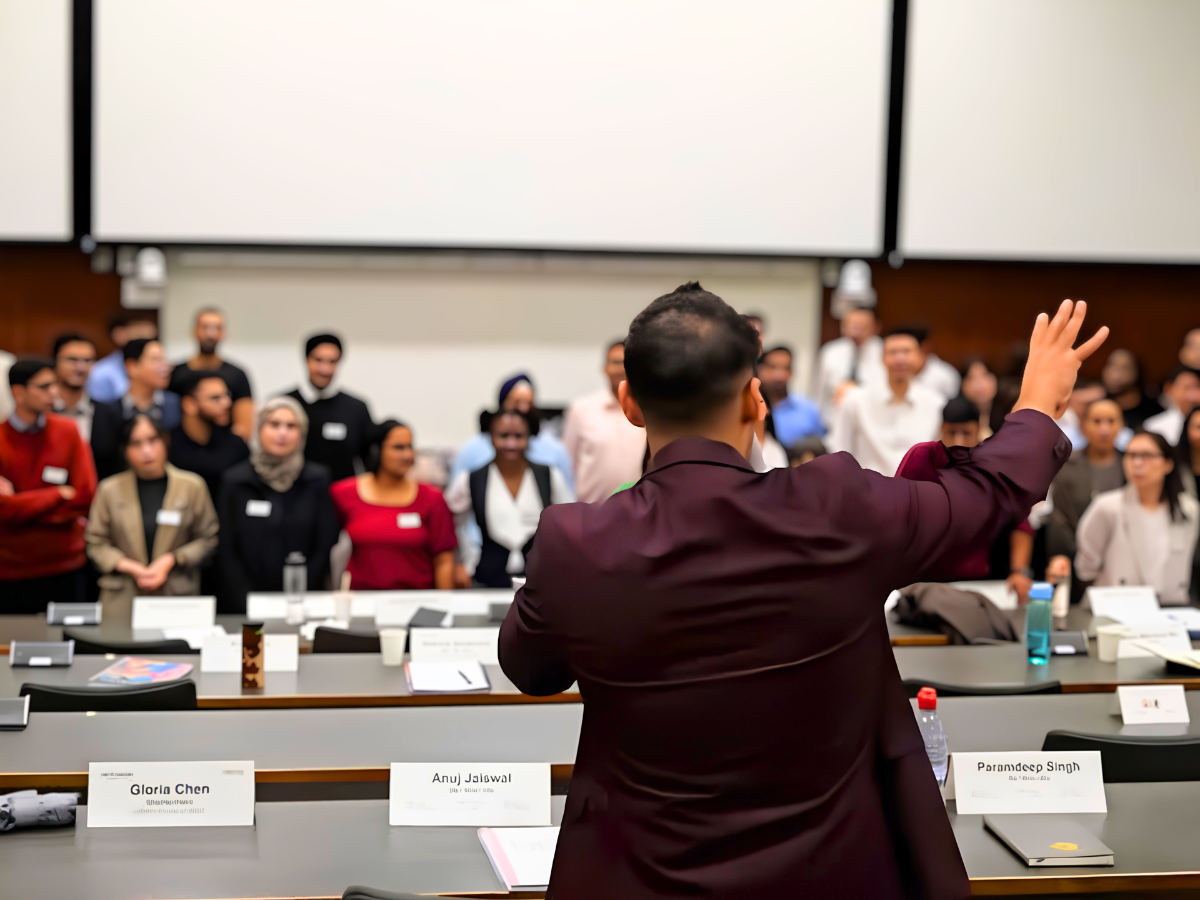
Ivan Wanis Ruiz addressing a full room during a communication coaching workshop

Being Right Isn't the Same as Being Understood.


Experts default to the language of other experts. It's efficient among peers, and it's exactly why so many good ideas stall the moment they leave the room they were built in. A board member, a client, a new hire, or a colleague from another department doesn't need less information. They need it organized around what they already know and what they need to decide.

A 2025 study in the International Journal of Business Communication found that workplace jargon measurably reduces how easily people process a message, undermines their confidence, and makes them less likely to ask questions or share information afterward, exactly the reactions a complex idea can least afford.
Bullock & Bisbey, International Journal of Business Communication, 2025

Where This Shows Up


Presenting to People Who Don't Share Your Background

Explaining a technical finding, a legal risk, or a financial model to a board, a client, or a cross-functional team without losing the substance.

Surviving the Q&A

A clean opening explanation falls apart the moment someone asks a real question, because the audience picked up a script, not an understanding.

Getting a Decision, Not Just a Nod

Everyone says they understand and nothing happens afterward, because that understanding was never actually tested in the room.

How PSL Is Different

Most Training Teaches You to Simplify Slides. This Teaches You to Test Understanding.


"Communication gets better when you put it to the test."

Most presentation training focuses on delivery: slower pace, fewer bullet points, cleaner slides. Those things help, but they don't fix the actual problem, which is an explanation that was never checked against the audience it was built for.

Public Speaking Lab works differently. Participants bring a real idea they need to explain, present it to people outside their field, get specific coaching on exactly where it broke down, and try again until it lands.

Starts on the Main Stage. Gets Built in the Room.


Keynote

Catalyze

"Give Great Ideas Momentum." Built around Hypothesis, Variables, Experiment, and Reaction, Catalyze is the keynote version of this same idea: a strong opener for conferences and leadership offsites about turning expertise into influence.

See Catalyze →
Training Lab

The Engagement Lab

The hands-on version. Participants test real explanations of their own complex work on colleagues outside their function, get specific feedback on where it lost people, and test it again before it matters.

See the Engagement Lab →

Many clients start with Catalyze as a keynote and follow it with an Engagement Lab session to build the skill inside their team.

After This, People Outside Your Field Actually Follow What You're Saying


  • Explain a technical, legal, financial, or scientific idea so a non-expert audience actually follows it
  • Handle real questions without losing the thread of the explanation
  • Structure a complex explanation around the decision the audience needs to make, not just the material itself
  • Get a room to actually engage with the material instead of nodding along
  • Build the habit of testing an explanation on someone outside the field before it matters

Built Around the Ideas Your Team Actually Needs to Explain


Every session works with real material participants bring, their own technical findings, legal analysis, financial models, or research, not generic case studies.

Keynote45 to 60 minutes
Training Lab90 minutes to 3 hours
Full dayup to 50 people
Multi-day cohortup to 50 people

Ideas That Started Complicated and Landed Anyway


"Ivan helped me hone a presentation about complex constitutional litigation delivered to a legal and lay audience. He showed me how to make my slides convey the same information more simply, and how to communicate my message more clearly. He also coached me on how to be a more confident and engaging speaker. Ivan's help was invaluable, the audience gave good feedback on the presentation and I've used Ivan's tips in other presentations."

Erica Stahl
Associate, Mandell Pinder LLP

"Ivan provided a communication strategies presentation to AMD Legal. Attendees including myself loved the presentation as various individuals mentioned that it was the best presentation ever. Ivan has this ability to convey complicated things in a very easy to digest language. The presentation was dynamic, entertaining, interactive and somehow magic! Ivan provided brilliant tips and tactics that I put to practice in my professional and personal life!"

David Ben Salem
Technology, AI, Privacy & Security Lawyer

Frequently Asked Questions


Who is this training for?

Subject matter experts, engineers, scientists, analysts, lawyers, finance professionals, and the managers or L&D leaders who send them. Anyone whose job depends on getting complex ideas across to people outside their field.

Does this replace presentation skills training?

No. Presentation skills training addresses delivery, pace, slides, and stage presence. This addresses something different: whether the explanation itself was ever built and tested for the actual audience receiving it.

Do you need to already understand our specific industry or technical content?

No. Every session works with real material participants bring themselves, their own technical findings, legal analysis, financial models, or research. Ivan doesn't need to become an expert in your field to coach you on how to explain it.

What's the evidence that this is a real problem, not just a soft skills issue?

A 2025 experimental study in the International Journal of Business Communication found that workplace jargon measurably reduces how easily people process information, undermines their confidence, and makes them less likely to ask questions or share information afterward.

Is this a keynote or a training session?

Both. Catalyze is the keynote version, a strong fit for conferences and leadership events. The Engagement Lab is the hands-on training version for building the skill inside a team. Many clients use both together.

What formats are available?

Keynote (45 to 60 minutes), Training Lab (90 minutes to 3 hours), full day (up to 50 people), and multi-day cohort programs (up to 50 people).

The Best Idea in the Building Doesn't Help If Nobody Else Can Follow It.

Tell us who needs to be following your team's ideas, a board, a client, another department, and we'll help you figure out where the explanation is breaking down.